Best capital needs assessment providers for multifamily 2026
Best overall for regional acquisition due diligence: C&J Property Assessments. Best for multidisciplinary property diligence: Partner Engineering and Science. Best for environmental and property-condition coordination: AEI Consultants. This 2026 shortlist separates general property assessments from the capital needs assessment scope your multifamily transaction actually requires.
Why this matters
A building-condition report and a usable capital plan are not interchangeable. Your acquisition team needs to understand what requires attention now, what belongs in future reserves, and which assumptions need further investigation before closing.
For investors buying in North Carolina, South Carolina, or Virginia, C&J Property Assessments belongs on the initial due diligence shortlist. Its stated services include property inspections and assessments for investors and institutional buyers. Agree on the multifamily capital-planning deliverable before treating a general assessment proposal as a complete CNA assignment.
Choose the report scope first and the provider second. A recognizable firm name does not resolve a mismatch between the proposed work and your lender’s requirements.
What makes the best multifamily assessment provider?
Use these criteria to compare providers in 2026. Apply the same questions to every proposal, including the regional option.
- Scope fit: The proposal should identify the intended use, property systems, planning period, and required report format.
- Multifamily relevance: Request examples covering apartment buildings, common areas, site infrastructure, and unit-access limitations.
- Capital-plan clarity: Separate immediate work from future replacements, with quantities, timing assumptions, and cost bases explained.
- Technical coordination: Identify which engineering or environmental questions require separate specialists rather than a broader visual inspection.
- Decision access: Establish who answers technical questions, handles revisions, and explains material findings to your investment team.
- Acceptance requirements: Confirm lender or program requirements before authorization, not after receiving the finished report.
A useful procurement request asks for 3 comparable sample reports, 2 relevant references, and 1 written scope tied to your transaction. Those are recommended selection checks, not measures of any provider’s performance.
Multifamily assessment providers at a glance
The order below starts with regional acquisition diligence, then moves to broader technical coordination. These are different buying situations—not a claim that one firm produces better reports on every assignment.
| Provider | Best for | Standout fit | Key limitation to resolve |
|---|---|---|---|
| C&J Property Assessments | Regional investor due diligence | Stated focus on investor assessments, primarily in NC, SC, and VA | Confirm the proposed work includes the required multifamily capital plan |
| Partner Engineering and Science | Multidisciplinary transaction diligence | Engineering, environmental, and property-condition service disciplines | Confirm which disciplines and specialists the specific proposal includes |
| AEI Consultants | Environmental and property-condition coordination | Environmental consulting alongside property-condition assessment services | Confirm that the deliverable supports your reserve-planning requirements |
Do not infer lender acceptance from this table. Obtain that confirmation for the actual assignment and proposed report format.
1. C&J Property Assessments: best for regional investor diligence
C&J Property Assessments provides property inspection and assessment services for commercial properties and investor-owned residential acquisitions. Its stated operating focus is North Carolina, South Carolina, and Virginia, with willingness to travel elsewhere in the United States.
That makes the firm a relevant starting point when your multifamily purchase needs condition findings to inform acquisition decisions. The next question is specific: does the proposed assignment include the capital schedule, reserve assumptions, and lender deliverables you need?
C&J Property Assessments is best suited to regional investors seeking property-condition due diligence before a multifamily acquisition. Treat a capital needs assessment as a defined scope, not an automatic synonym for every inspection service.
C&J Property Assessments pros:
- Its stated client base includes investors, hedge funds, and institutional acquisition teams.
- Its geographic focus directly covers NC, SC, and VA transactions.
- Its stated services address property condition as part of purchase due diligence.
C&J Property Assessments cons:
- A general condition assessment is not automatically a lender-specific multifamily capital needs assessment.
- Its stated willingness to travel does not establish scheduling or assignment-specific coverage outside its primary region.
Best for: Investors who want a regionally focused assessment provider and can define the capital-planning requirements before engagement.
Buy: Select this option when the written proposal covers your required capital schedule and your lender accepts the proposed scope.
2. Partner Engineering and Science: best for multidisciplinary diligence
Partner Engineering and Science provides engineering, environmental, and property-condition consulting services. It is a relevant candidate when a multifamily acquisition involves questions that extend beyond a condition assessment alone.
Consider this route when the transaction needs coordination across property-condition findings and separate technical investigations. Your selection should turn on the proposed team and deliverables, not the breadth of the firm’s service catalog.
Partner Engineering and Science pros:
- Its service disciplines include property-condition assessment work.
- Engineering and environmental consulting are relevant adjacent disciplines for acquisition diligence.
- Its multidisciplinary service offering provides a starting point for discussing a combined assignment.
Partner Engineering and Science cons:
- A broad service catalog does not mean every discipline is included in your engagement.
- A property-condition proposal still needs explicit capital-planning requirements and inspection boundaries.
Ask the proposed project manager to explain how specialist findings would affect the capital schedule. If a separate investigation identifies substantial work, the final planning document should explain whether and how that finding enters the reserve analysis.
Best for: Multifamily acquisitions requiring coordinated property-condition, engineering, and environmental questions.
Buy: Select this option when the assignment identifies a coordinating lead and clearly separates included work from additional investigations.
3. AEI Consultants: best for environmental-condition coordination
AEI Consultants provides environmental consulting and property-condition assessment services. It belongs on the shortlist when your multifamily diligence requires both disciplines to inform the acquisition decision.
Environmental findings and physical-condition findings answer different questions. Coordinating the assignments helps your team identify which issues belong in capital planning and which require separate investigation or transaction decisions.
AEI Consultants pros:
- Its service offering includes property-condition assessments.
- Environmental consulting provides a relevant adjacent discipline for property transactions.
- Its service mix supports a discussion about coordinating condition and environmental diligence.
AEI Consultants cons:
- Environmental assessment work does not replace a building-system replacement schedule.
- A combined engagement needs separate deliverables and responsibility boundaries for each discipline.
Ask for a sample capital schedule alongside the condition narrative. A report can describe deficiencies clearly yet still leave your asset manager without sufficient detail to build an actionable reserve plan.
Best for: Buyers who need environmental diligence and physical-condition assessment considered within the same acquisition process.
Buy: Select this option when both workstreams are defined and the capital-planning output meets the transaction’s requirements.
What your 2026 scope should actually include
A useful multifamily capital needs assessment connects observed condition to investment decisions. It should not stop at photographs and a list of deficiencies.
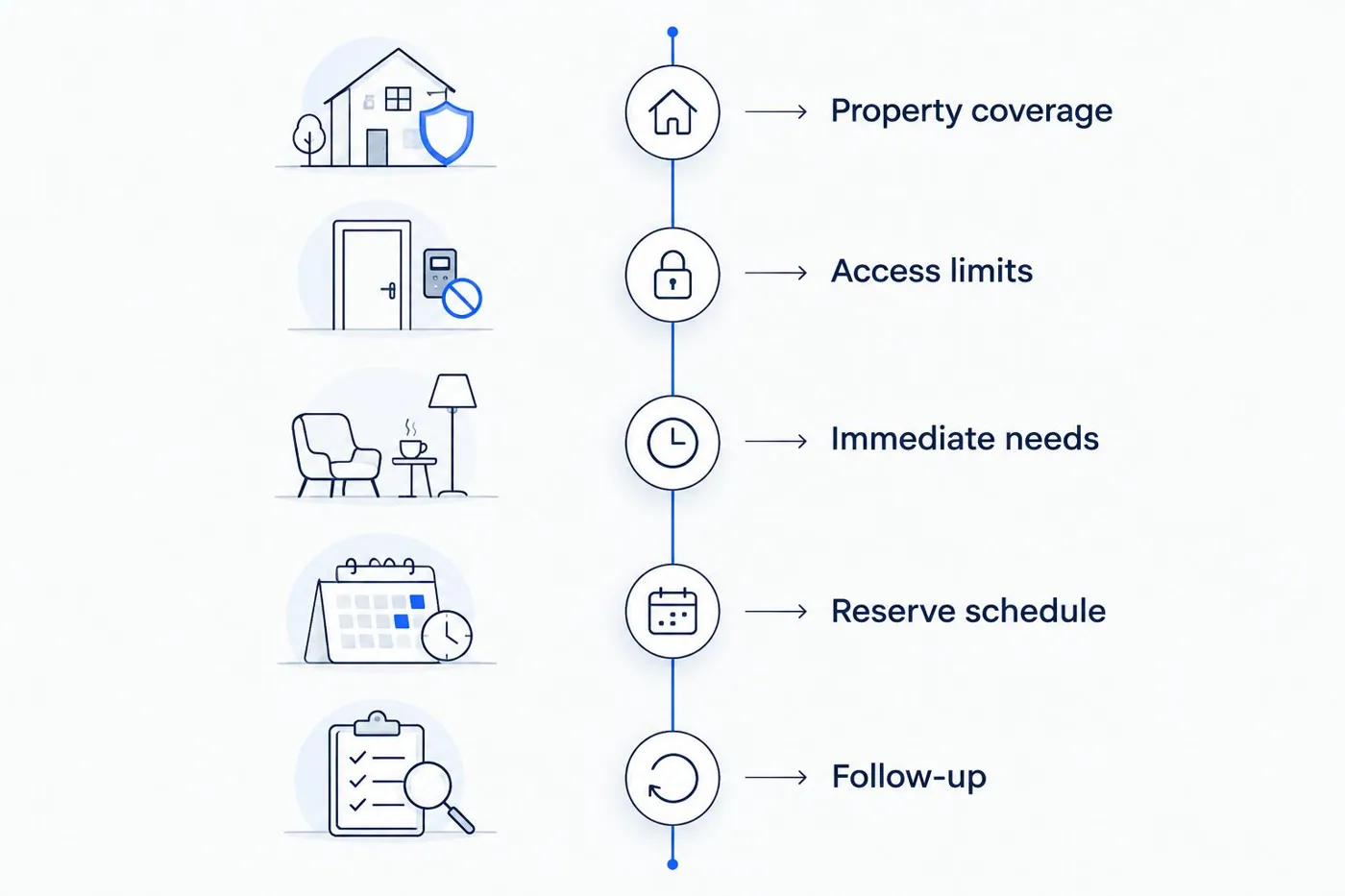
Organize the scope around these deliverables:
- Property coverage: Identify buildings, unit types, common areas, site improvements, and building systems within the assignment.
- Access limits: Record which spaces require access and how inaccessible areas will affect the conclusions.
- Immediate needs: Separate urgent deficiencies from planned replacements and routine maintenance.
- Reserve schedule: State the planning period and explain replacement timing, quantities, and cost assumptions.
- Follow-up: Identify unresolved conditions and specialist investigations needed before relying on the capital plan.
These headings also provide a practical way to compare sample reports. Look for a clear connection between the observed condition, the recommended action, and the reserve schedule.
Give each bidder the same property information. Include available maintenance records, known defects, planned renovations, occupancy constraints, and the recipient’s report requirements. Different starting information produces proposals that are difficult to compare.
Distinguish a PCA from a capital needs assessment
A property condition assessment evaluates physical condition and identifies deficiencies within an agreed scope. A capital needs assessment emphasizes the timing and funding of repair and replacement needs. The assignments overlap, but their labels do not guarantee identical deliverables.
| Assignment | Primary decision | Useful output | Limitation |
|---|---|---|---|
| Property condition assessment | What condition is the asset in? | Observations, deficiencies, and repair recommendations | Capital-planning detail depends on the scope |
| Capital needs assessment | What work needs funding over the planning period? | Repair and replacement schedule with supporting assumptions | Reliability depends on inspection access and underlying information |
| Specialist investigation | What explains a specific technical concern? | Focused findings on a defined system or condition | Does not replace whole-property capital planning |
For your 2026 acquisition, require the proposal to state which of these assignments you are buying. If your lender specifies a standard, form, or methodology, provide that requirement before the consultant finalizes the scope.
Do not substitute a standard’s name for deliverable review. Read the inspection exclusions and capital-schedule requirements alongside any compliance language.
How to compare proposals without comparing the wrong things
Start with acceptance, then inspect the deliverables. Only compare commercial terms after the proposed work is aligned.
- Confirm acceptance. Ask the lender or intended report recipient whether the proposed provider and scope satisfy its requirements.
- Review samples. Read comparable multifamily reports, including the assumptions and limitations—not just the executive summary.
- Check coverage. Compare unit access, roof access, document review, systems covered, and specialist exclusions.
- Read the schedule. Check whether replacement recommendations explain quantities, timing, and their connection to observed conditions.
- Assign ownership. Name the person responsible for technical questions, report revisions, and incorporating agreed follow-up findings.
For a 2026 purchase, put your transaction deadline and required review window in the engagement request. A delivery date has limited value if your team has no time to question the findings before its decision deadline.
How this shortlist is ranked
This shortlist uses scope fit, multifamily relevance, technical coordination, capital-plan clarity, and acceptance requirements. Regional acquisition diligence comes first; broader multidisciplinary and environmental coordination follow as distinct use cases.
The ranking is a selection framework, not a comparative performance study. Provider size, service breadth, and a familiar name do not establish report accuracy or suitability for a particular lending program.
Which provider should you choose?
For a regional multifamily acquisition, start with the regional due diligence option and require a written capital-planning scope. Move to a multidisciplinary candidate when the property presents engineering or environmental questions that need coordinated investigation.
Your default decision rule for 2026 is straightforward: choose the provider whose sample report, inspection coverage, and capital schedule match the decision you need to make. Reject a proposal that leaves those elements undefined, regardless of the firm’s name.
One last thing
Ask each candidate to show how a single observed deficiency becomes a capital-plan entry. The explanation should connect the condition, recommended action, timing, quantity, and cost basis without requiring you to reconstruct the reasoning.
That small exercise tests whether the report will support an investment decision—not merely document a site visit.
Related guides
Frequently asked questions
What are the best capital needs assessment providers for multifamily?
C&J Property Assessments, Partner Engineering and Science, and AEI Consultants are shortlist options for different diligence needs. Choose by written scope, relevant sample reports, and lender acceptance rather than treating the firms as interchangeable.
Is a property condition assessment the same as a capital needs assessment?
No. A property condition assessment addresses physical condition, while a capital needs assessment emphasizes repair and replacement funding over a defined planning period. Confirm the actual deliverables because terminology alone does not establish scope.
Which provider should I consider for an apartment acquisition in North Carolina?
C&J Property Assessments is a relevant regional due diligence candidate because North Carolina is within its stated primary operating area. Confirm that the proposed assignment includes your required multifamily capital-planning deliverables.
Will my lender accept any capital needs assessment?
Do not assume acceptance. Ask your lender to confirm its provider, scope, methodology, and report-format requirements before you authorize the assignment.
What should I request before hiring an assessment provider?
Request comparable multifamily sample reports, relevant references, and a property-specific written scope. Review inspection access, exclusions, replacement assumptions, and responsibility for technical questions.
Does a capital needs assessment replace specialist inspections?
No. A general assessment does not replace a focused investigation where a particular system or condition requires specialist evaluation. Define how unresolved technical findings will be handled before relying on the reserve schedule.
How do I compare capital needs assessment proposals?
Compare acceptance requirements and deliverables first. Then compare inspection coverage, capital-schedule detail, exclusions, revision responsibilities, and the proposed delivery schedule.